A hernia often begins as a small swelling or bulge that may seem easy to ignore. It can become more noticeable while coughing, lifting something heavy, standing for long periods, or straining during bowel movements. Some hernias cause very little discomfort initially, while others gradually interfere with work, exercise, sleep, and everyday movement.
Consulting a laparoscopic hernia surgeon helps determine what type of hernia is present, whether surgery is required, and which surgical approach may be appropriate.
For patients in Kolathur and nearby areas of Chennai, an early surgical assessment can be useful even when symptoms are mild.
What Exactly Is a Hernia?
A hernia develops when tissue or an internal organ pushes through a weak area in the surrounding muscle or abdominal wall.
Common types include
- Inguinal hernia in the groin
- Umbilical hernia around the navel
- Incisional hernia at a previous surgical site
- Femoral hernia near the upper thigh or groin
- Ventral hernia in the abdominal wall
The symptoms and treatment approach can differ depending on the location, size, previous operations, and individual health factors.
Signs That Deserve a Surgical Evaluation
A visible bulge is one of the most recognizable signs, but it is not the only reason to seek medical advice.
Consider consulting a surgeon if you notice
- A lump in the groin or abdominal area
- Pain while coughing, bending, or lifting
- Heaviness or pressure around the swelling
- A bulge that becomes larger while standing
- Increasing discomfort during physical activity
- A previously diagnosed hernia becoming more troublesome
A surgeon can usually assess a suspected hernia through a clinical examination. Imaging may be advised when the diagnosis is uncertain or when additional anatomical information is required.
Does Every Hernia Need Immediate Surgery?
Not necessarily.
The decision depends on the type of hernia, symptoms, size, risk of complications, general health, and impact on daily life. Some patients with minimally symptomatic hernias may be monitored after appropriate medical evaluation.
However, hernias generally do not repair the underlying abdominal-wall defect on their own. This is why persistent or progressive symptoms should not simply be managed indefinitely with pain medication or support garments without surgical advice.
What Is Laparoscopic Hernia Surgery?
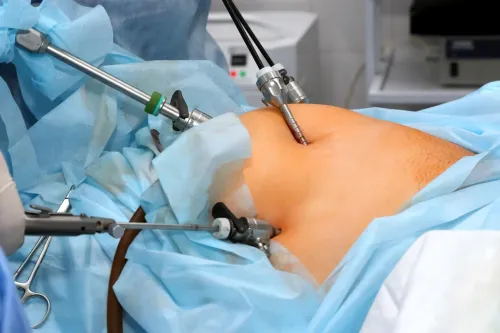
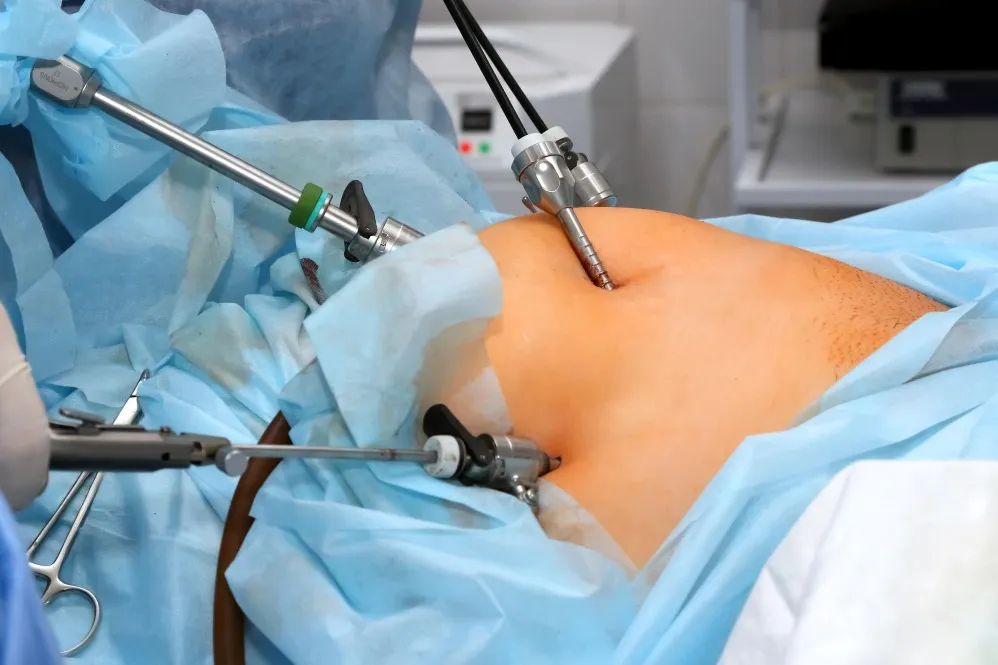
Laparoscopic surgery is a minimally invasive technique in which the surgeon works through small incisions using a camera and specialized instruments.
Depending on the type of hernia and individual circumstances, laparoscopic repair may offer advantages such as smaller wounds and potentially quicker recovery compared with some open procedures.
It is not automatically the best technique for every patient. Previous abdominal operations, hernia characteristics, recurrence, medical conditions, and surgical findings all influence the choice.
When Does a Hernia Become an Emergency?
Most hernia consultations are planned, but certain symptoms require urgent medical attention.
Seek emergency evaluation for severe or rapidly increasing pain, vomiting, abdominal swelling, inability to pass stool or gas, or a hernia swelling that becomes firm, very tender, discoloured, or cannot be pushed back when it previously could.
These symptoms may indicate obstruction or compromised blood supply to trapped tissue and should not be managed at home.
What Happens During a Hernia Consultation?
A consultation usually begins with a discussion of when the swelling appeared, whether it changes with activity, and whether there is associated pain.
The surgeon may examine the area while the patient is standing or coughing. Relevant medical history, previous surgeries, medications, occupation, and lifestyle factors may also be reviewed.
If an operation is being considered, the discussion should cover
- The exact type of hernia
- Open versus laparoscopic repair
- Whether mesh is appropriate
- Anaesthesia
- Expected recovery
- Activity restrictions
- Possible risks and complications
This allows treatment to be based on the actual hernia rather than assumptions based only on symptoms.
For people seeking a laparoscopic hernia surgeon in Kolathur, Dr. Amilthan K provides surgical assessment for hernia and other general surgical conditions. The appropriate treatment is determined after clinical evaluation rather than assuming that every hernia needs the same operation.
Recognizing a hernia early gives patients time to understand their options and plan treatment appropriately. A persistent swelling, increasing discomfort, or limitation in everyday activity is a reasonable reason to arrange a surgical assessment.
Keywords