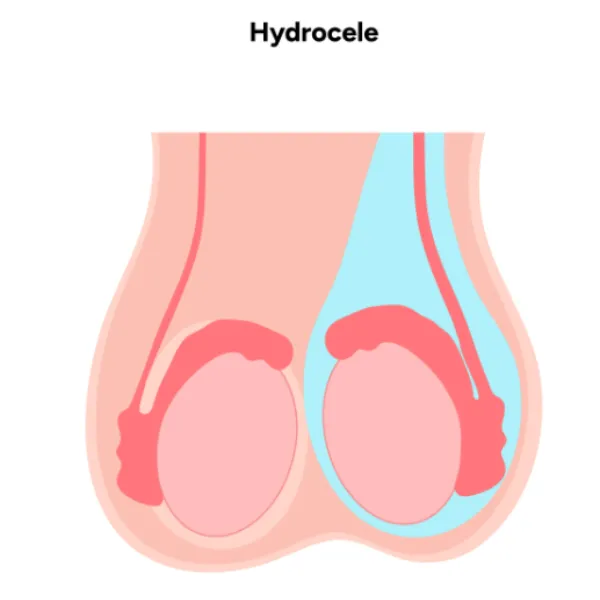
Scrotal swelling can have several causes, and a hydrocele is one of them. A hydrocele occurs when fluid collects around the testicle, producing swelling that is often painless but can become uncomfortable as it increases in size.
The purpose of hydrocele treatment is not merely to reduce swelling. The first priority is confirming that the swelling really is a hydrocele and excluding other causes that may require different management.
How Does a Hydrocele Present?
In adults, a hydrocele commonly appears as swelling on one side of the scrotum, although both sides can occasionally be affected.
Some hydroceles remain small and cause few problems. Larger ones may cause
- A feeling of heaviness
- Discomfort while walking
- Difficulty during exercise
- Problems with clothing
- Cosmetic concern
- Local inconvenience during daily activities
Pain is not always a prominent symptom.
Not Every Scrotal Swelling Is a Hydrocele
This is an important reason not to self-diagnose.
Scrotal enlargement can also be associated with hernia, infection, cysts, varicocele, trauma, or testicular conditions.
A clinical examination helps differentiate these possibilities. Ultrasound may be recommended when the diagnosis needs confirmation or the testicle cannot be adequately examined.
Does Every Hydrocele Need an Operation?
No.
A small hydrocele that causes no meaningful symptoms may sometimes be observed after appropriate assessment.
Surgery becomes more relevant when the hydrocele is large, persistent, uncomfortable, increasing in size, or interfering with everyday activity.
The decision should consider both the clinical findings and how much the swelling affects the patient.
What Is Hydrocele Surgery?
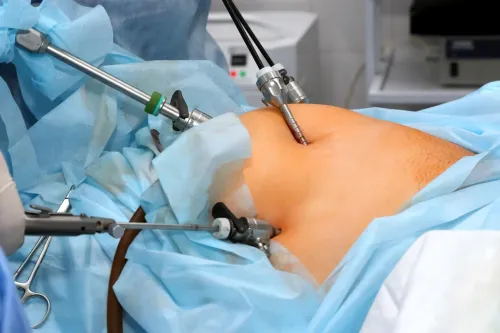
Surgical repair is generally known as hydrocelectomy.
The operation addresses the sac containing fluid around the testicle rather than simply draining the fluid.
The exact surgical technique can vary according to the hydrocele and surgeon's assessment.
Patients should understand that temporary postoperative swelling and bruising can occur. The scrotum may not immediately look or feel completely normal after the procedure because tissues require time to heal.
Why Isn't Simple Fluid Drainage Always a Permanent Solution?
Removing fluid with a needle can reduce the size temporarily, but the fluid may accumulate again because the underlying sac remains.
Aspiration may have a role in particular circumstances, but it should not automatically be viewed as equivalent to definitive surgical treatment.
A surgeon can explain which approach is appropriate based on the patient's health and the characteristics of the hydrocele.
Questions to Ask Before Treatment
Before deciding on an operation, patients may find it helpful to ask
- Has the diagnosis been confirmed?
- Is an ultrasound necessary?
- Is observation reasonable?
- Why is surgery being recommended?
- What type of anaesthesia will be used?
- How should the wound be cared for?
- When can work and exercise resume?
- What amount of swelling after surgery is expected?
- Which postoperative symptoms require urgent review?
Clear answers make recovery planning easier.
When Is Scrotal Pain Urgent?
A gradually enlarging painless hydrocele is very different from sudden severe testicular pain.
Sudden onset of intense testicular or scrotal pain requires urgent medical assessment because conditions such as testicular torsion can be time-sensitive.
Likewise, swelling accompanied by fever, significant redness, trauma, or severe tenderness deserves prompt evaluation.
Patients considering hydrocele treatment in Kolathur can consult Dr. Amilthan K for assessment of scrotal swelling and discussion of whether observation or surgical management is appropriate.
Hydrocele is often manageable, but the diagnosis should come before the treatment decision. Confirming the cause of swelling ensures that a seemingly straightforward condition is not mistaken for another scrotal problem requiring different care.
Keywords